Not all roofing labor is the same rate
The labor to install a square of shingles on a walkable, single-story roof is not the labor to install the same square on a steep, two-story roof. That difference isn't markup — it's a real change in method, safety setup, and time. Estimating platforms account for it with modifiers, and those modifiers are exactly the kind of thing a scope built from a few photos tends to default away from.
Two of the most commonly missed conditions:
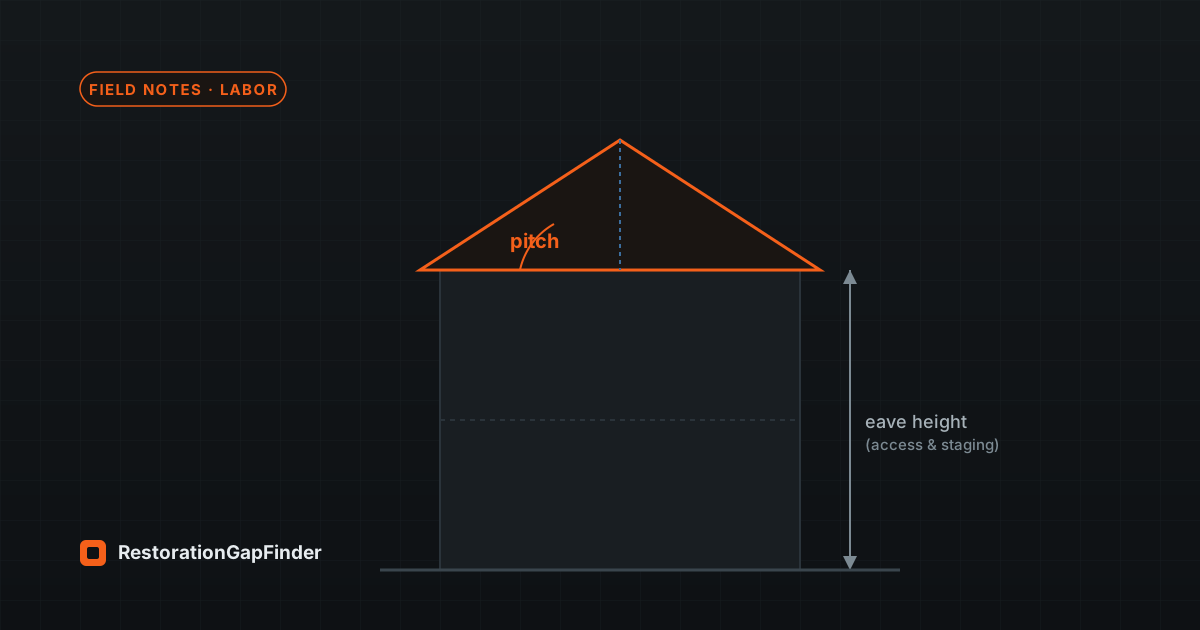
- Steep slope. Above a certain pitch (commonly around 7/12 and steeper, with further steps higher up), the roof stops being walkable. The crew needs different footing, staging, and fall protection, and production slows. Estimating systems have specific steep-slope options for exactly this.
- Height / stories. A second- or third-story eave changes access, ladder and staging setup, material loading, and debris handling. "High roof" and height-based options exist to reflect that added labor.
Why a photo estimate defaults to the easy case
When a scope is written quickly or from photos, the pitch and the number of stories aren't always captured accurately. A tool or estimator that doesn't have a measured pitch will often assume a standard, walkable slope and a single story — because that's the safe default when the data isn't there. The result is a scope that prices the roof as if it were the easiest version of itself.
That's usually an oversight, not a dispute. The pitch and the height are physical facts of the building; they're just facts the estimate didn't capture.
An honest caveat: these are conditions to verify, not automatic add-ons. A steep-slope or height modifier belongs on the estimate when the roof actually is steep or tall — measured and documented — not applied reflexively. The point is to match the estimate to the real roof, in either direction.
How to document it
- Measure the pitch. A pitch reading (or a measured rise/run) turns "looks steep" into a number the estimate can be checked against.
- Note the stories and access. Record the eave height and anything that genuinely constrains access for this specific roof.
- Compare to the estimate. Check whether the scope's labor reflects the measured pitch and height, or defaulted to standard/one-story.
- Tie any modifier to the measurement. Justify a steep or high-roof line with the pitch reading and the height — verifiable facts, not impressions.
Where a tool helps
Catching a mis-defaulted pitch or height means comparing what the estimate assumed against what the roof actually is. RestorationGapFinder reads the estimate and flags where measured conditions like slope and height aren't reflected in the scope, each with its justification, and no dollar figures in the export. It points to what to verify; your measurements and the carrier's own price list settle the numbers.
This article is general information for contractors, not legal, code, or insurance advice. Estimating rules and modifiers vary by platform, region, and carrier — always confirm against your measurements, the estimating platform in use, and the specific policy.