What ice & water shield does
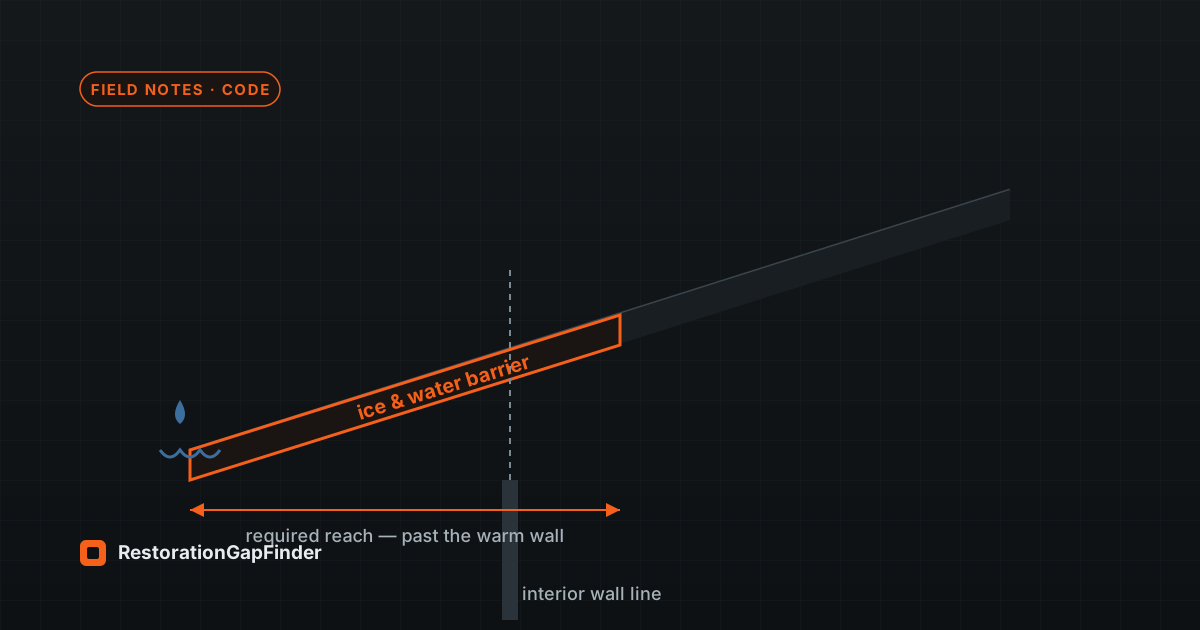
Ice & water shield (an ice barrier membrane) is a self-adhering, waterproof underlayment installed in the parts of a roof most likely to see water backup — classically the eaves, where ice dams form, and in valleys, where water concentrates. Ordinary underlayment sheds water; an ice barrier stays watertight even when water is forced back up-slope under the shingles. That's why code treats it as a separate requirement, not a substitute for felt or synthetic underlayment.
What the code generally requires
The widely used model residential code (the IRC) requires an ice barrier in regions with a history of ice forming along the eaves. Where it applies, the barrier generally must extend from the roof's edge to a defined distance up-slope past the interior wall line — the point the membrane has to reach is measured from the warm wall inside, not just the roof edge. Many jurisdictions also call for ice barrier in valleys and around certain penetrations.
Two honest caveats:
- Local adoption varies. Your jurisdiction adopts a specific code edition and may amend it. The exact trigger (climate/ice-dam history), the required up-slope distance, and where else it's required are set by the code your building department actually enforces — confirm it there, not from a general article.
- It's climate-dependent. In warm regions the requirement may not apply at all, while colder regions may go beyond the model code.
So treat the above as the shape of the requirement, and verify the specifics against your locally adopted code.
Why it gets left off estimates
A quick scope written from photos often includes an underlayment line but not the distinct ice-barrier line the code calls for — they look similar from a distance, and the ice barrier's real driver (the interior wall line, the climate trigger) isn't visible in a photo. So the omission is usually an oversight, not a dispute: the estimate underlayment simply isn't the code-required ice barrier.
How to document it
- Confirm the locally adopted code and whether the ice-barrier trigger applies to this address.
- Note where it's required for this roof — eaves to the required up-slope point, valleys, penetrations.
- Check the existing estimate for a true ice-barrier line (not just generic underlayment).
- If it's missing where code requires it, add it with the code requirement as the justification — verifiable, not a matter of opinion.
Where a tool helps
Catching an omitted ice barrier means knowing the requirement, checking whether it applies to this specific roof, and confirming the estimate didn't already cover it. RestorationGapFinder runs that check as part of reading the estimate — flagging code-driven items like the ice barrier with their justification, and no dollar figures in the export. It points to what to verify; your local code has the final word.
This article is general information for contractors, not legal, code, or insurance advice. Ice-barrier requirements vary by jurisdiction and climate — always confirm against your locally adopted building code and the specific policy.