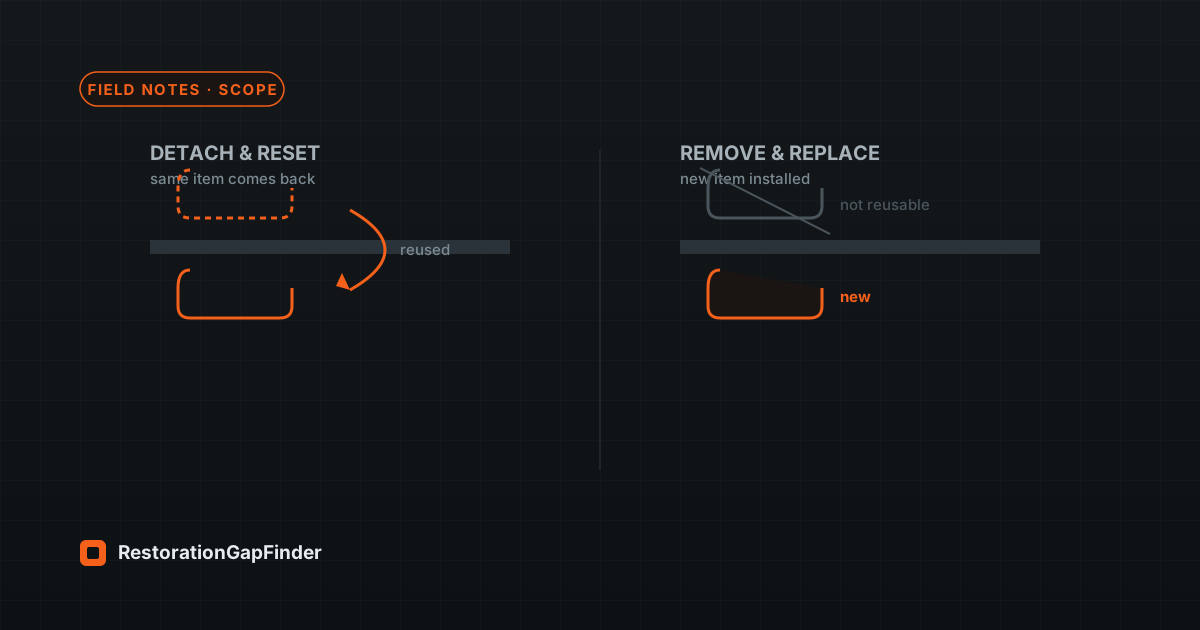
Two different lines for two different situations
A roof replacement rarely happens in isolation. There are things attached to the roof or its edge that have to come off for the work and go back afterward — gutters, downspouts, gutter guards, satellite dishes, antennas, and detached solar attachments among them. How the estimate handles each one comes down to two distinct line types:
- Detach & reset (D&R). The existing item is carefully removed, set aside, and reinstalled after the roof work. The material is the same item; the line is the labor to take it off and put it back.
- Remove & replace (R&R). The item is removed and a new one installed. This belongs where the existing item can't be reused — it's damaged, obsolete, or won't survive removal.
The right choice is condition-dependent, and getting it wrong in either direction distorts the scope: resetting something that can't be reused leaves the job short, while replacing something that was perfectly good overstates it.
Why these lines go missing or land wrong
From a photo, you often can't tell whether a gutter or a mounted item is reusable — or that it's even there. Three common gaps:
- The item just disappears. The scope replaces the roof but never accounts for the gutters that had to come off, so there's no reset line at all — as if they reinstalled themselves.
- Reset where replace was needed (or the reverse). The estimate assumes the existing item survives removal when it won't, or replaces an item that would have reset fine.
- Specialty items overlooked. Detached solar attachments, gutter guards, or a satellite dish need their own handling, and each is easy to miss because it's not "roofing" in the obvious sense.
An honest note on detached solar and similar systems: who is allowed to detach and reset them can be regulated, and the reinstallation may need to be done by a qualified trade. Document the item; don't assume the roofing crew handles every attached system.
How to document it
- Inventory what's attached to the roof and its edges before the tear-off — gutters, guards, downspouts, dishes, mounts, detached solar.
- Assess reuse for each. Note the condition and whether the existing item can reasonably be reset or genuinely needs replacement.
- Match the line to the condition. Reset what's reusable; replace what isn't — and justify the call with the item's documented condition.
- Flag specialty trades. Where an item needs a qualified installer, note it rather than folding it into general labor.
Where a tool helps
Catching a missing reset line — or a reset that should have been a replacement — means accounting for everything that had to come off the roof and matching each to its real condition. RestorationGapFinder reads the estimate and flags where attached items aren't accounted for, each with its justification, and no dollar figures in the export. It points to what to verify; the item's actual condition and your local requirements decide reset versus replace.
This article is general information for contractors, not legal, code, or insurance advice. Reset-versus-replace decisions and who may perform them vary by item and jurisdiction — always confirm against the actual condition, the relevant trade requirements, and the specific policy.