Why estimates come up short
An adjuster's estimate is a fast, good-faith pass — often written from photos or a short site visit. That means legitimate line items get left out, not out of bad intent, but because they weren't visible, weren't measured, or weren't top of mind during a quick scope. When a contractor rebuilds the roof to code and to manufacturer instructions, the gap between "what was scoped" and "what the job actually requires" turns into an under-scoped estimate.
The items below are the ones that go missing most often. None of them are tricks — each is a real component of a code-compliant roof. Whether any specific item applies depends on your local building code, the manufacturer's installation requirements, and the policy, so treat this as a starting checklist, not a guarantee.
The usual gaps
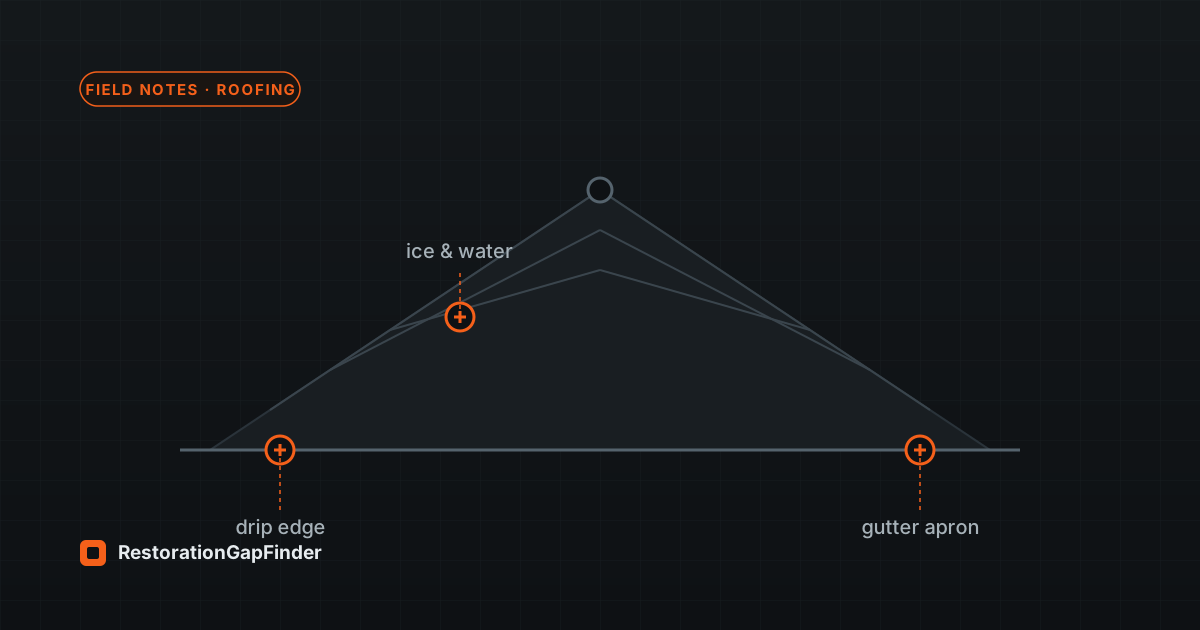
- Drip edge (eave and rake). Many current code editions require drip edge at eaves and rakes. If the scope replaces the roof but omits drip edge, that's a common, defensible addition where code requires it.
- Ice & water barrier. In colder climates, code often requires an ice-and-water membrane a set distance up-slope from the eave, and in valleys. Estimates frequently include underlayment but not the ice-and-water barrier the code calls for.
- Starter strip. Manufacturer instructions typically require a manufactured starter course at eaves (and sometimes rakes). Cutting field shingles as starter can conflict with the warranty, which is why the dedicated line item belongs.
- Ridge vent and ridge cap. If the roof uses continuous ridge ventilation, both the vent and the cap shingles are their own items — and intake/exhaust balance is a code and warranty consideration.
- Flashing (step, counter, and apron). Flashing at walls, chimneys, and transitions is routinely reused in a quick scope. Where it can't be reused without compromising the install, replacement is a legitimate item.
- Gutter apron. Distinct from drip edge, gutter apron directs water into the gutter rather than behind it — often required and often omitted.
How to catch them without guessing
The reliable method is boring on purpose: compare the written scope against what a code-compliant, manufacturer-compliant install of that roof actually requires, line by line, and document why each addition belongs.
- Read the estimate line by line and mark what's present.
- Check each item against local code and the manufacturer's instructions — those are your justification, not opinion.
- Back it with photos from the job that show the condition.
- Write the justification in plain terms an adjuster can verify — the code section, the manufacturer requirement, or the field condition.
That last step matters most: a supplement moves faster when every added item comes with a reason an adjuster can confirm, rather than a dollar figure to argue over.
Where a tool helps
Doing this by hand on every claim is slow and easy to rush. RestorationGapFinder reads the estimate, checks each line against a rules set and a short questionnaire about the specific job, and returns a report of the missing items with code references and justifications — and no dollar figures in the export, so it reads clean to any adjuster. It doesn't decide what you're owed; it makes sure nothing legitimate gets left off the list.
This article is general information for contractors, not legal or insurance advice. Always verify requirements against your local code, the manufacturer's instructions, and the specific policy.